
Squint in India
Squint or Strabismus is a common eye disorder where both eyes dont look at the same direction at the same time
Get a Free Quote
Our coordinators respond within 2 working hours.
🔒 100% confidential. No spam, ever.
Your Journey with INDHEAL
Free Consultation
Share your medical reports. Our coordinators connect you with the right specialist within 2 working hours.
Travel to India
We arrange your visa letter, airport pickup, and accommodation near the hospital.
Treatment
Your procedure at a JCI or NABH accredited hospital with an internationally trained surgeon.
Recovery
Recuperate comfortably with dedicated nursing care and daily coordinator check-ins.
Follow-up
Return home with full medical records and ongoing remote follow-up from your care team.
Why Choose India for Squint?
Save 60–80%
World-class treatment at a fraction of US, UK or Australian costs — without compromising on quality.
Expert Surgeons
Internationally trained specialists with thousands of successful procedures and global accreditations.
No Wait Times
Get treated within days of arrival. Full concierge support for visa, travel and accommodation.
Top Hospitals for Squint
View all →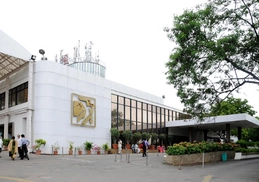

Frequently Asked Questions
A squint eye is a condition where the two eyes in a person look in different directions. A squint is medically referred to as strabismus. This occurs due to the improper alignment of the two eyes. A squint is more common in children and babies than adults. But if left untreated, a squint can progress into adulthood and remain for the rest of one’s life.
A squint may be obvious when a sufferer looks straight at an object. In such situations one eye will be looking straight ahead, while the other may be turned in another direction. The affected eye may be turned inward, outward, upward or downward.
The biggest problem with a squint is the difficulty in assessing distances or depth perception. All persons have a level of three-dimensional vision that provides a depth of vision. For this three-dimensional effect both the eyes have to work together in precise coordination. In persons with squint this coordination is not in order resulting in a loss of proper three-dimensional vision.
Strabismus or squint eye can be
• Congenital, which means that a person is born with it
• Hereditary, which means there is a genetic cause and the condition runs in the family
• Due to an illness
There are various reasons for squint eye to occur.
• A squint eye may occur as a result of the poor coordination of the muscles in both the eyes.
• A squint may also occur due to refractive problems of the eyes.
• In children the most common cause is hypermetropia otherwise known as hyperopia or long-sightedness. In children with long-sightedness, there will be a tendency to roll the eye inwards while looking at distant objects. This inward rolling of the eye is called as esotropia. This is to increase the accommodative power of the eye.
• Presence of congenital cataracts and optic nerve disorders can also cause squint.
• Problems with the eye muscles like Brown’s syndrome and Duane's retraction syndrome can cause squint while looking side wards.
Some of the risk factors for squint are:
• Family history
• Premature delivery
• Low birth weight
• Cerebral palsy
• Down's syndrome
Diagnosing squint eye:
Squint or strabismus is to be suspected if a child exhibits constant eye turn. A detailed eye examination is then recommended to identify the extent and type of squint.
A Hirschberg corneal reflex test is the definitive test for the diagnosis. In this test a light beam is shown into the eye and the doctor observes its reflection from the cornea. In normal eyes the refection will occur from the centre of the corneas. If the eyes are not properly, there will be a difference in the reflection pattern. This helps to identify whether a person has exotropia, hypertropia, esotropia or hypotropia.
There are various methods for correcting squints:
Eyeglasses
This is the primary treatment for the correction of a squint. Eyeglasses are very effective in accommodative squint which occurs due to problems with accommodation of the eye. The squint will become less noticeable once a person starts wearing glasses and may return while not wearing it. The glasses also prevent the occurrence of amblyopia or lazy eye. The glasses need to be worn continuously to correct the squint and this can become a tedious affair for children. They need to be trained to wear it during their normal activities especially while playing.
Eye patches
Eye patches are not used to align the eyes but to improve the vision in an amblyopic eye. This is more commonly used in children where visual development is still possible. In this procedure the eye with good vision is covered by a patch and the child is trained to see with the lazy eye. Children are encouraged to use the lazy eye while reading, watching television and playing indoor board games.
This stimulates the nervous pathway between the eye and the brain. If used properly, this can help to bring back the vision of the affected eye to normal levels.
Eye drops
This may be used as an alternative to eye patches. In this atropine containing eye drops are used to blur the vision of the good eye. This makes the children to use the amblyopic eye.
Botulinum toxin injection (Botox)
A botox injection given to the eye muscles can weaken their activity thus aligning the eyes properly. The effects of the injection may last only for a shorter period. This treatment is recommended in those in whom surgery has failed to offer the desired results.
Squint Surgery
Surgery for squint is recommended if proper correction is not possible by wearing eyeglasses. The aim of a squint surgery is to align the eyes properly by increasing their coordination. The surgery tries to weaken the activity of a very active intraocular musculature of one eye as compared to other. Similarly, a surgery may be done to strengthen a very inactive intraocular muscle group of one eye.
A surgery for squint cannot correct a lazy eye or amblyopia. This will need to be corrected by wearing glasses or eye patches after surgery. The risks associated with squint surgeries are very low. The most common risk is under correction or over correction of the problem. Both these situations may need a follow up surgery to fine tune the correction.
The ideal age for a squint surgery in children is between one to two years. This helps to align the eyes and to make them work together as a pair. This can prevent the development of amblyopia. If the outcome of the surgery is on expected lines the child may not have to wear glasses. In older children and adults, the surgery is done to make the eyes look straighter.
The type of surgery may depend on the eye turn and the muscles responsible for it. So, correction of exotropia, hypertropia, esotropia or hypotropia may require different techniques.
A squint surgery is done under general anaesthesia. The duration of surgery will be about an hour or so. Hospitalisation if required will be only for a day or two at the maximum.
Squint eye treatment in India- for adults
The treatment for squint eye in adults depends on the intensity of the condition. The aim of surgery in adults is to align the eyes properly. The goal is not an improvement in vision but to improve the looks. Eyeglasses will be needed after surgery to improve the vision.
The duration of squint eye surgery in India is about one and half to two hours. The average period of hospitalisation if necessary is about a day.
Squint eye treatment in babies:
The ideal age for squint surgery in babies is between one to two years. This helps to improve the vision significantly. This can also help to avoid amblyopia in future. The baby will be able to focus with both eyes after surgery.
Natural treatment for squint eyes:
Eye exercises are helpful to strengthen the eye muscles and can help to improve the coordination between the two eyes. This is more helpful in older children and young adults. Exercises may also be prescribed after surgery to strengthen the muscles. Also, Ayurveda is found to have effective treatment for squint especially in children. Based on the initial evaluation the practitioner devises the treatment plan which generally includes an inpatient treatment for 15 days initially and some follow up sessions once in a year for the consecutive years. The number of years of follow up will be decided by the doctor depending upon the condition and the improvement.
Ready to get started?
Free consultation. No commitment. Response within 2 working hours.
Get a Free Quote
We respond within 2 working hours.
Request Received!
A coordinator will contact you within 2 working hours.