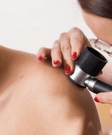
Skin Cancer in India
Skin cancer occurs due to uncontrollable growth of abnormal cells in the epidermis, outermost layer of skin
What is Skin Cancer?
Skin cancer is due to the abnormal growth of skin cells. While areas of skin that are more exposed to sunlight have a higher risk, it can also occur in other areas of your skin.
Skin cancer is the most common form of cancer diagnosed among men and women. Men are twice as likely to develop this than women.
Types of Skin cancer
There are three main types of skin cancer - melanoma, basal cell carcinoma, and squamous cell carcinoma.
Basal cell carcinoma
This type of cancer begins in the basal cells. Basal cells are the cells within the skin that produce new cells as the old cells die off.
It occurs typically in areas of your skin that have a higher exposure to ultraviolet rays from the sun. These include your head and neck. Basal cell carcinoma appears as a slightly transparent bump on the skin, but it can take other forms.
Symptoms of basal cell carcinoma
The common signs include:
- Pearly white or pink bumps on the skin
- A brown, blue or black lesion
- Flat and scaly red patches
- A white waxy scar-like lesion
Causes of basal cell carcinoma
It occurs due to a genetic mutation in the DNA. Basal cells are the bottom layer of the epidermis. They produce all the new skin cells as the old ones wear down.
The mutation makes the basal cells multiply rapidly and continue its growth. These abnormal skin cells eventually form into a cancerous tumor or the lesion that appears on the skin. Most of the damage to the DNA comes from ultraviolet radiation.
The exact reason for this mutation is not known yet.
Risk factors of basal cell carcinoma
Some factors increase the risk of you having basal cell carcinoma. These include
- Extreme sun exposure - You will be at a higher risk if you spend too much time under the sun
- Fair skin - People who have fair skin or have freckles are at a higher risk of developing this disease.
- Radiation therapy - If there is a history of radiation therapy to treat acne or any other skin conditions, it increases the risk.
- Increasing age - The majority of basal cell carcinomas occur in older people.
- Family history - If you have a family history of basal cell carcinoma, you will have an increased risk of developing it.
- Personal history- If you have had it before, there is a high chance you could have it again.
Melanoma
It is the most serious type of skin cancer. Melanin is the pigment in your skin that gives it color. Melanoma develops in the skin that produces melanin.
The exact cause for melanoma is unknown, but exposure to ultraviolet radiation is a risk factor. If you are under the age of 40, you have a high risk of developing this disease.
Melanomas can occur in places that have low exposure to sunlight. These would include the soles of your feet, palms of your hand and fingernail beds.
They also occur in areas that have had very little sun exposure. These type of hidden melanomas include:
- Under a nail - This is a rare type of melanoma that can occur under a fingernail, toenail, palms or the soles of feet.
- In the eye - Eye melanoma, also known as ocular melanoma, can occur in the uvea. It is the layer beneath the white part of your eye (sclera).
- In the mouth, digestive or urinary tract or vagina - This type of melanoma is mucosal melanoma. It can develop in the mucous membranes the line your nose, mouth, esophagus, urinary tract, anus, and vagina. They are difficult to detect because they are easily mistaken for other conditions.
Symptoms of melanoma
You will see a change in an existing mole
Unusual moles - These can be moles that have an irregular border, asymmetrical shape, or keep changing in shape and color.
What causes melanoma?
Melanoma occurs when there’s something wrong in the melanin-producing cells. It is these melanin-producing cells (or melanocytes) that give color to your skin.
Skin cells develop in a healthy and controlled manner typically. But, when some of the cells develop DNA damage, new cells will rapidly grow and can form a mass of cancerous cells.
What are the risk factors of melanoma?
Factors that increase your risk of melanoma are:
- Fair skin
- History of sunburn
- Excessive ultraviolet light exposure
- Having a high number of unusual moles
- Weakened immune system
Squamous cell carcinoma
It is a type of skin cancer that develops in the outer layers of your skin. It affects the squamous cells that make up the outer and middle layers of your skin.
This form of skin cancer is more aggressive than basal cell carcinoma. If left untreated, squamous cell carcinoma can spread and reach other parts of your body. It can lead to severe complications.
Mutations to your DNA can cause squamous cell carcinomas. These mutations will make the squamous cells grow out of control. They also have a longer life than healthy cells. Ultraviolet radiation is the main reason behind DNA mutations.
Symptoms of squamous cell carcinoma
- A flat sore
- Rough, scaly patches on your lips that may evolve to an open sore
- A red sore or a rough patch inside your mouth
- Scars or ulcers
Risk factors of squamous cell carcinoma
- History of sunburns
- Family history of skin cancer
- Excessive sun exposure
- Fair skin
- Use of tanning beds
- Rare genetic disorders
Skin cancer stages
There are two main groups of Skin cancers- nonmelanoma and melanoma.
Nonmelanoma skin cancers include basal cell carcinoma and squamous cell carcinoma.
There are five stages of cancer in both these groups.
Nonmelanoma skin cancer stages
- Stage 0 - The abnormal cells have not yet spread beyond the outermost layer of skin.
- Stage I - This is when cancer spreads to the next layer of skin, the dermis. But, the size is still quite small, no longer than 2 centimeters.
- Stage II - The tumor has grown larger than 2 centimeters, but it has not yet spread to any nearby sites or lymph nodes.
- Stage III - Cancer has spread from the primary tumor to nearby tissue or a bone. It is larger than 3 centimeters now.
- Stage IV - Cancer has spread to lymph nodes and bone or tissue. It has grown in size and is also larger than 3 centimeters.
Melanoma skin cancer stages
- Stage 0 - This is a noninvasive type of skin cancer. It has not yet infected below the epidermis.
- Stage I - Cancer has spread to the second layer of the skin, but it remains small.
- Stage II - Cancer has not spread beyond the original tumor site, but it has grown much larger and thicker. You will start to experience other symptoms such as bleeding, scaling, or flaking.
- Stage III - This is a severe stage in which cancer has metastasized to your lymph nodes or any other nearby tissues.
- Stage IV - This is the final and most advanced stage of melanoma. It is an indication that cancer has spread beyond the site of the primary tumor and has spread to lymph nodes, organs, or any tissues distant from the original site.
Skin cancer diagnosis
To diagnose skin cancer, your doctor will:
Inspect and examine your skin - You may have changes to your skin due to many issues or diseases. So your doctor will examine your skin to confirm that your skin changes are due to skin cancer. Sometimes, they may do further testing to confirm the diagnosis.
Remove a sample of abnormal skin for testing (skin biopsy). Your doctor will remove any abnormal or suspicious patches of skin for testing. A biopsy will determine whether you have skin cancer or not. It will also determine the type of skin cancer that you have.
Skin cancer treatment
Your doctor will decide on your as per the type, location, stage, and size of your skin cancer. After reviewing all of these factors, your doctors will choose a treatment for you. These could be:
- Cryotherapy - The growth of cancer cells are frozen and destroyed using liquid nitrogen.
- Mohs surgery - This is a more complicated surgery in which the cancer growth is removed layer by layer. Each layer will be examined under a microscope until none of the abnormal cells are visible.
- Chemotherapy - You will have to take certain drugs to kill cancer cells. You may take this orally or as an IV feed.
- Radiation - Doctors will use high-powered radiation to kill the cancer cells.
- Photodynamic therapy - In this, targeted laser light destroys the cancer cells.
- Excisional surgery - The surgeon will cut out the cancer growth and the healthy skin surrounding it.
- Biological therapy - This form of treatment uses your own body’s immune system to kill off the cancer cells
Top Hospitals for Skin Cancer
We partner with India's most respected accredited hospitals.





Frequently Asked Questions
Yes. The right treatment at the right time can cure skin cancers. It is usually easy to detect, and so treatment can be given at an early stage
The main treatments are Cryotherapy, Chemotherapy, Mohs’ surgery, and Excisional surgery. Your doctor will decide on the right treatment based on your condition and the stage of cancer
Melanoma is the most dangerous type of skin cancer. However, there are highly effective treatments for it. The success depends on the stage of melanoma and your overall health. Treatment at an early stage will have very good results
The first sign is the presence of a new mole or a change in the appearance of an existing mole. You can use the ABCDE method to check if the mole is a sign of melanoma. Check for the following in the mole
- Asymmetry: Does the mole have an irregular/asymmetric shape?
- Border: Are the borders rough?
- Color: Does it have dark spots or uneven shades
- Diameter: Is it larger than a pencil eraser?
- Evolving: Is it growing in size or texture?
Other signs of melanoma include blurry vision or partial loss of sight with dark spots in the iris
Get a Free Quote
We respond within 2 working hours.
Request Received!
A coordinator will contact you within 2 working hours.