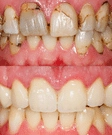
Full Mouth Rehabilitation in India
Full mouth rehabilitation or reconstruction is done when all the teeth need to be restored. after an accident or injury
What is Full Mouth Rehabilitation?
Detailed information about Full Mouth Rehabilitation coming soon. Contact us for personalised guidance from our medical coordinators.
Top Hospitals for Full Mouth Rehabilitation
We partner with India's most respected accredited hospitals.


Frequently Asked Questions
Full mouth rehabilitation is a comprehensive treatment to correct anomalies of all the teeth in the upper and lower jaw. It is also referred to as full mouth reconstruction or restoration. The goal of full mouth rehabilitation is to improve the function, looks, as well as integrity of the entire set of teeth in the mouth. It also aims to correct defects or disorders in the gum as well as the underlying bone. Full mouth rehabilitation helps to create a better alignment between the upper and lower jaws. In short full mouth rehabilitation tries to recreate an ideal set of teeth for a person. Full mouth rehabilitation involves a lot of time and money.
Full mouth rehabilitation can take months, even up to a year to be completed. It depends on the specific procedures involved and the treatment rendered. Full mouth rehabilitation is carried out by an expert team of dentists specialised on various aspects of dentistry. The team comprises of –
• Periodontists - specialists in gum care
• Restorative dentists- specialists in conservative management of tooth through fillings, veneers etc.
• Endodontists- specialists in root canal treatments for diseases affecting the tooth pulp
• Prosthodontists- specialists in replacing missing tooth by removable dentures or fixed partial denture like dental bridges and crowns
• Oral surgeons - specialists in jaw surgeries
• Orthodontists - specialists in tooth movements
• Cosmetic dentists- specialising in smile design, tooth bleaching and other cosmetic procedures
The first step towards full mouth rehabilitation in India is to devise a proper treatment plan. It should incorporate the needs, necessities and the budget of the patient. A detailed discussion is done with the patient to explain the various treatment options, their advantages, disadvantages and cost involved. Once the doctor and patient agree on the treatment plan, the treatment is started. The usual steps involved are given below.
Restoration of the health of the gums- If the problems with the gums are minor in nature, a thorough cleaning of the tooth surface and the gums will be sufficient. This process is called scaling. If deep pockets are present in gums around a small number of teeth a procedure called curettage is done to remove them. Multiple deep pockets with associated bone loss may require a procedure known as flap surgery. The surgery aims to thoroughly debride the gums and reposition it to a higher plane.
Restoration of decayed tooth- Tooth decay may cause cavities in the tooth which may be small or large. Small painless cavities are filled with aesthetically pleasing filling materials like tooth coloured resins. Large cavities with or without pain may require root canal treatment (RCT) for correction. In RCTs, the pulpal portion of the tooth is removed from the root canal. The root canal is then filled up with an inert material called gutta percha.
Replacement of missing tooth- Tooth may be lost due to a variety of reasons. The missing teeth are replaced during full mouth rehabilitation. There are various techniques for replacing missing tooth. They include:
• Removable partial dentures- These dentures can be removed and washed by the patients. They are indicated if the mouth condition is not ideal for the placement of a fixed denture.
• Fixed partial dentures- Also called dental bridges, fixed partial dentures remain fixed in the mouth for a very long time. The most common material for making a fixed partial denture is porcelain or ceramic. Metal bridges may also be used under certain circumstances.
• Implants- Dental implants are the latest in the field of tooth replacement. In this procedure the implant is screwed into the jawbone and an artificial tooth is placed over it. Implants are made of strong but light metals and alloys. Implants are also used as anchors for bridges in situations where there is a long gap between natural teeth.
• Crowns- Tooth crowns are placed to reinforce a broken or fractured tooth as well as those treated by RCT. The materials used are ceramic or metal.
• Veneers- Veneers are used to restore the tooth surfaces that are grossly eroded or abraded.
Restoration of aesthetics- The procedures are done by a cosmetic dentist and involve smile design and correction.
Full mouth rehabilitation is a process for those who have teeth that have worn out due to continuous wear and tear. People suffering from an abnormal form of night grinding called bruxism have teeth that are significantly worn out. Similarly, a lot of people will have multiple missing tooth or fractured tooth. Deep cavities in the teeth that cause pain in regular intervals are a feature of many mouths. Gum disorders due to improper gum care or certain systemic diseases like diabetes also needs proper corrective treatment.
Aim of Full Mouth Rehabilitation:
The aim of a full mouth rehabilitation is to restore the teeth to its natural state – as much as possible. This includes –
• The restoration of small cavities in the tooth using proper fillings
• The restoration of large cavities in the teeth with root canal treatments
• The restoration of the health of the gums through surgical and non-surgical methods
• The removal of grossly decayed tooth that cannot be saved
• The replacement of missing tooth with appropriate dentures
• The restoration of the natural smile by re-contouring or reshaping the tooth
• The realignment of tooth through orthodontic correction
These treatment procedures are carried out by specialists with expertise in their field. Certain treatments can be carried out simultaneously while certain others may require the completion of a particular treatment. Latest advancements in the field of dentistry have made these treatments a painless and less cumbersome process.
As already described full mouth rehabilitation consists of lot of steps. The duration and type of treatment may vary with individuals. The procedure is balanced between the best treatment possible and the cost involved. Advanced treatments may cost more and is advised for those for whom the cost is not a constraint. Lesser priced but effective treatment procedures are suggested for those on a budget.
Full mouth rehabilitation in usually done in two stages in India. The first stage takes 5-7 days and costs around 5400 USD per jaw approximately.
The second stage is done about 6 months to one year after the first stage. This stage needs 7-10 days to be completed. During this stage a new screw retained titanium ceramic bridge is fixed in the upper jaw and a new screw retained titanium acrylic bridge is fixed in the lower jaw. The upper jaw titanium framework Ceramic Bridge costs around 2900 USD and the lower jaw Titanium framework Acrylic bridge costs around 2200 USD.
These prices usually include the followings services: initial consultation, specialist consultation, pre-operative investigations (Cone beam CT scan, study models, clinical photographs), anaesthetic evaluation, prosthetic phase, oral prophylaxis.
Get a Free Quote
We respond within 2 working hours.
Request Received!
A coordinator will contact you within 2 working hours.